Why Your Usual Night Route Stops Working the Week the Clocks Change
Quick Answer: The clock change shifts your run from dusk to full darkness in a single day, and that changes four things simultaneously: your visibility to drivers, your own ability to read the surface, the number of other people around, and the traffic pattern on your route. A path that is busy and lit at 6pm in October is empty and dark at 6pm in November. Re-scout the route in the dark before you run it, rather than discovering the differences at pace.
You have run that loop two hundred times. It is completely familiar.
The clocks go back on a Sunday, and on Monday it is a different route with the same map.
Here is what actually changes, and what to do about it in the week beforehand.
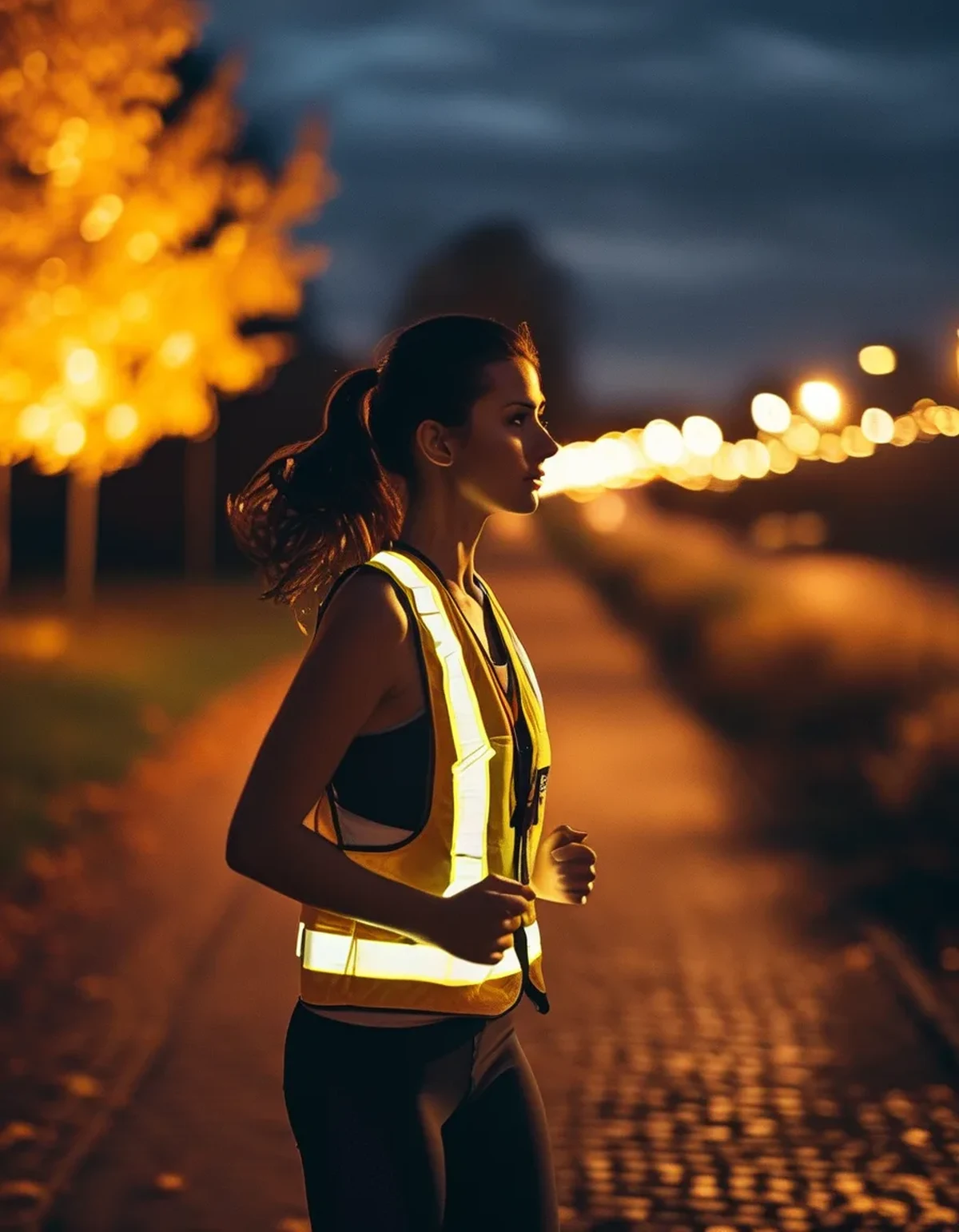
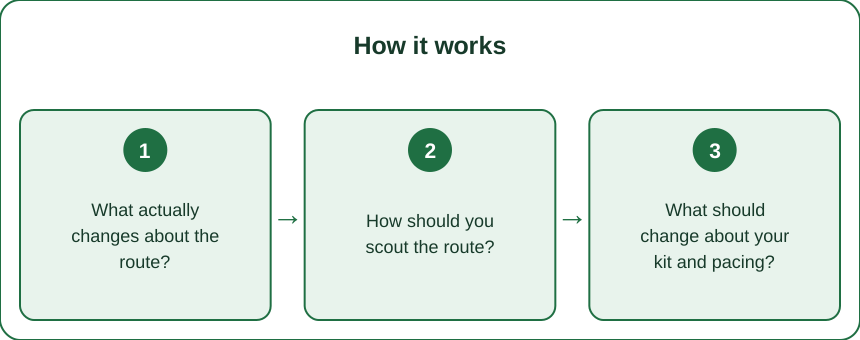
What actually changes about the route?
Four variables, all moving at once, and none of them gradual.
Ambient light drops below the threshold where surfaces read. At dusk you can still see texture, camber and edges. In full dark you are relying on street lighting, which is designed for roads rather than footpaths and leaves large gaps.
Other people disappear. Dog walkers, cyclists and other runners all thin out sharply after full dark. A path that felt populated at 6pm in October can be genuinely empty at 6pm in November, and that changes the safety calculation.
Driver visibility gets worse in a specific way. Wet roads at night reflect headlights and create glare, and low sun during the shifted commuting hour produces dazzle at exactly the times people are driving home. You become harder to see even when you are lit.
Autumn debris hides on the ground. Wet leaves cover kerbs, potholes and drain covers. A surface you know is not the same surface once it is covered and unlit.
The traffic pattern shifts too. Commuter volume moves with the clock change, so a junction that was quiet at your usual time may now be at its busiest.
And your own vision needs time to adapt. Dark adaptation takes 20 to 30 minutes, and running from a bright house into a dark street means the first several minutes are the worst-seeing part of the run.
How should you scout the route?
Walk it, in the dark, before you run it. It takes half an hour once.
Walk the loop at your actual run time. Not a mental exercise — you need the real lighting on the real evening.
Mark the dark gaps. Note every stretch longer than 50 metres with no street lighting. Those are the sections where surface hazards and personal safety both concentrate.
Check the surface where leaves collect. Corners, kerbs and the downhill side of paths. These will stay covered until they are cleared, which may be never.
Look at crossings from the driver’s perspective. Stand where a driver would be and see whether an approaching runner is visible. Several crossings that feel fine in daylight are genuinely poor at night.
Identify bail-out points. Where can you leave the route onto a lit main road? Knowing three of these changes how a run feels.
Note where the pavement narrows or disappears. In daylight you step around it automatically. In the dark you need to know it is coming.
Then decide whether to modify or replace. Often two small changes — swapping one dark section for a lit parallel street — save the route entirely.
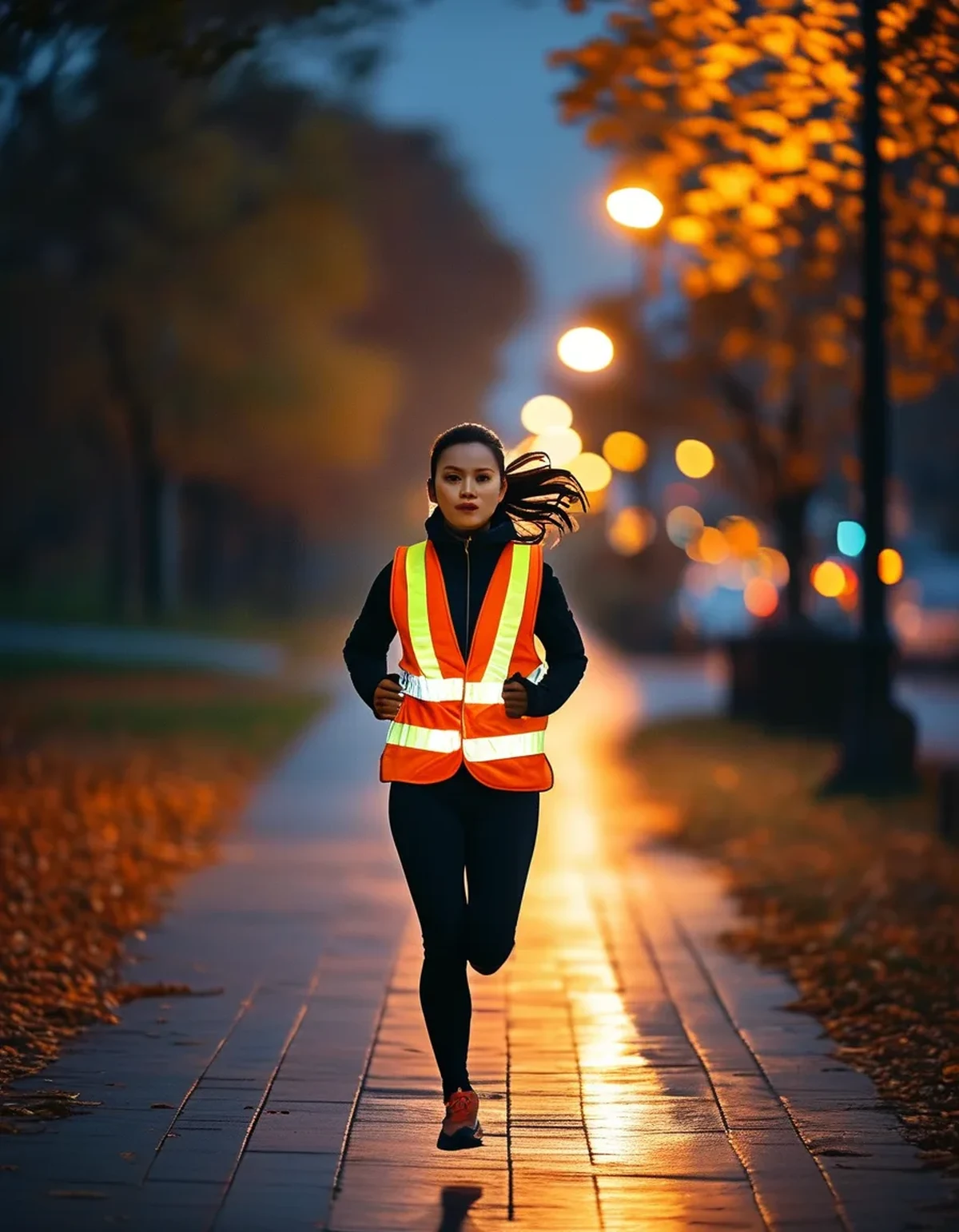
What should change about your kit and pacing?
More light than you think, more reflection than feels necessary, and a slower first mile.
Reflective material must be on moving parts. Ankles, wrists and knees. Movement is what a driver’s eye detects, and a static reflective panel on your back is far less effective than reflective bands that move.
Carry a light that lets you see, not just be seen. A headtorch of a few hundred lumens changes surface reading completely. A red blinker makes you visible and shows you nothing.
Angle the headtorch down, not forward. Pointing it further ahead feels natural and it flattens the surface, hiding exactly the texture and edges you need. Angled down at three to four metres shows camber and debris.
Run the first 10 minutes slower. Dark adaptation, cold tissue and an unfamiliar-feeling route all argue for an easy start. This is also where most autumn trip injuries happen.
Shorten your stride slightly on unlit sections. A shorter stride puts your foot down more predictably and gives you more recovery from a bad step.
Assume drivers have not seen you at every junction. Make eye contact where possible and never assume a stopped car has registered you.
Tell someone the route and take a phone. Basic, frequently skipped, and worth more than any piece of kit.
Seasonal note: the fortnight around the clock change is when driver behaviour is least adapted too — everyone is commuting in the dark for the first time this year. Treating that specific fortnight as the highest-risk period of the running year is a reasonable posture.
5 Mistakes Runners Make the Week the Clocks Change
Assuming a familiar route is a known route. Familiarity is with the daylight version. The dark version has different hazards in different places.
Wearing dark technical kit with a small reflective logo. Most running clothing is far less visible than people assume. Reflective bands on wrists and ankles cost very little and outperform an expensive jacket’s trim.
Pointing the headtorch too far ahead. It flattens the surface and hides the texture you actually need to read. Angle it down.
Keeping the same pace expectation. Night pace is legitimately slower for the same effort — worse footing, more caution, colder air. Chasing the summer number is how people fall.
Running both earbuds in on empty paths. Situational awareness is a real safety input in the dark. One out, or bone conduction.
And the seasonal one: running the same route at the same time every night. Predictability is worth trading away when you are the only person on a path.
FAQ: Dark Route Running Questions, Answered
How bright should a headtorch be?
A few hundred lumens is plenty for road and path running. Beam pattern matters more than raw output — a wide beam shows the surface better than a narrow spot.
Is reflective gear or a light better?
Both, for different jobs. Reflective makes you visible to headlights; a light lets you see the ground. Neither substitutes for the other.
Why does my pace drop at night for the same effort?
Worse footing, more caution, colder air and often less GPS accuracy. A slower night pace at the same heart rate is entirely normal.
Should I change routes for winter?
Modify rather than replace where you can. Swapping one or two dark sections for lit streets usually preserves the route you like.
Is it safer to run in the morning instead?
Mornings after the clock change are lighter for several weeks, so yes, temporarily. Come December both ends are dark.
How long does dark adaptation take?
Roughly 20 to 30 minutes for substantial adaptation. Dimming your indoor lights before heading out genuinely helps the first mile.
TL;DR:
- The clock change moves your run from dusk to full dark overnight — four risk factors shift at once.
- Walk the route in the dark before running it; mark the unlit gaps and the leaf-covered corners.
- Put reflective material on moving parts — ankles, wrists, knees — not just your back.
- Use a headtorch angled down at three to four metres, and run the first 10 minutes easy.
- Treat the fortnight around the change as the highest-risk period of the running year.
Half an hour of scouting buys you the whole winter.
Keep Reading
This article is for general informational and styling purposes only. Fit, sizing, and product availability may vary.