Why Your Headlamp Angle Quietly Changes Your Running Form - and Where to Point It
Quick Answer: A headlamp aimed too close makes you look down, and looking down changes your whole posture chain - head forward, shoulders rounded, hips back, stride shortened. The fix is to angle the beam so the brightest part lands about 10-15 feet ahead on road and 6-10 feet on technical trail, not at your feet. A waist or chest light in addition to the head lamp is the bigger upgrade: it casts shadows that reveal terrain without pulling your gaze down at all.
Most people set beam angle in a driveway while standing still, which is the wrong posture and the wrong distance.
Set it while running, and reset it whenever the terrain changes.
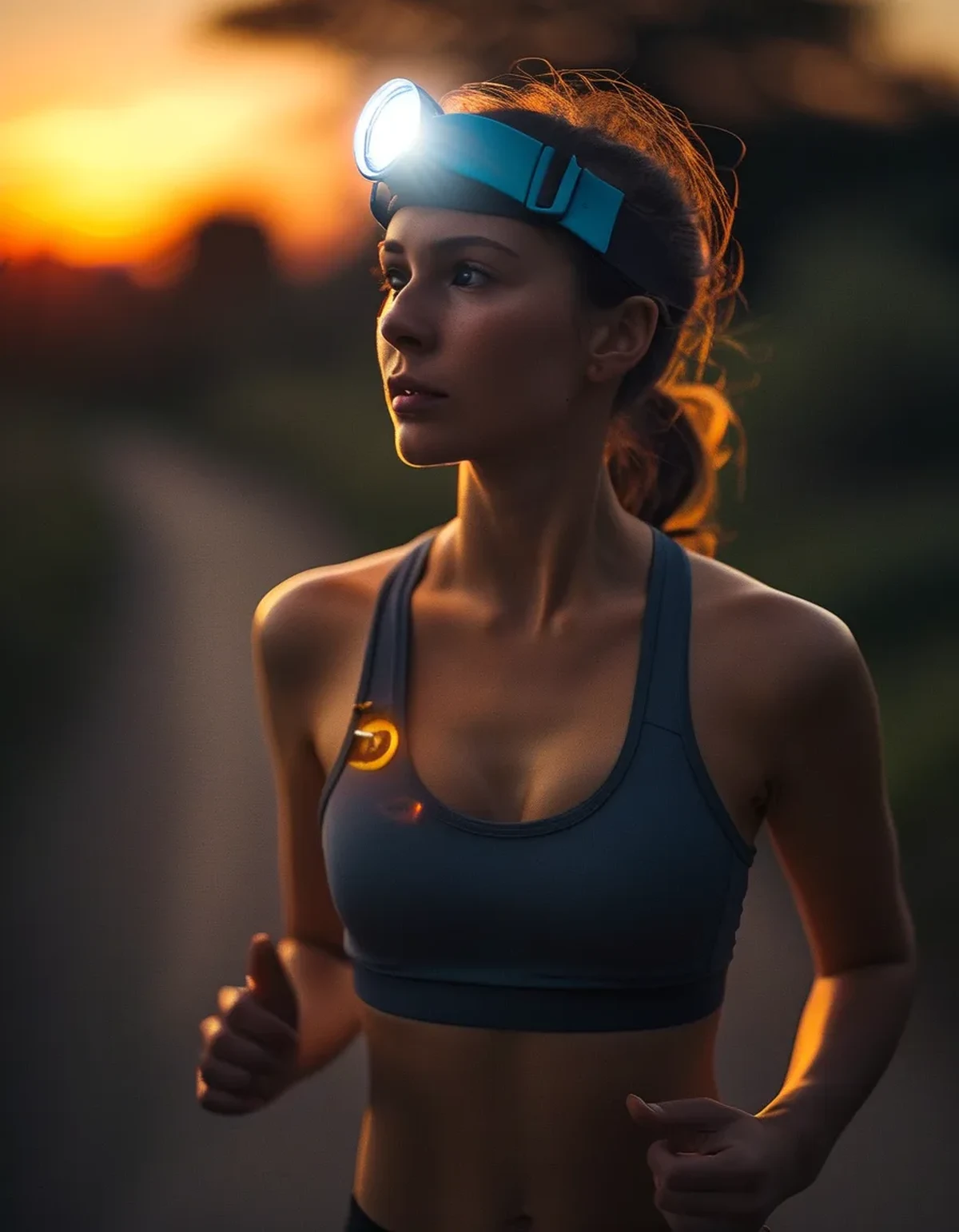
How does looking down actually change your form?
Your head weighs roughly 10-12 pounds, and where it goes, the rest follows.
Tilting the head down shifts the load forward, and the muscles of the neck and upper back have to work harder to hold it there. Sustained over 40 minutes, that produces the neck and shoulder soreness night runners routinely report and attribute to cold.
Then the chain continues. A forward head position tends to round the upper back, which restricts rib expansion, which reduces how fully you breathe. It also shifts your center of mass, so the hips sit back slightly and the stride shortens.
The measurable outcome: cadence often drops and stride length shortens on night runs, which is a well-observed phenomenon usually blamed on the darkness itself. Beam angle is a meaningful part of it.
The self-check: partway through your next night run, notice where you are looking without changing anything first. If your gaze is landing within a couple of strides, you have found it.
Where should the beam actually point?
It depends on surface and speed, and it is not one setting.
Road and paved paths: the brightest part of the beam should land 10-15 feet ahead. At running speed that gives you about 2-3 seconds of reaction time, which is enough for anything a road produces.
Groomed trail or gravel: 8-12 feet. Slightly closer, since footing needs more attention.
Technical trail: 6-10 feet, and expect to look down more legitimately - here the compromise is real and the fix is a second light source rather than beam angle.
How to set it: put the lamp on, jog twenty steps down your street, and stop the moment you notice yourself dipping your chin. Adjust upward, repeat. Setting it standing still in a driveway gives you a different head angle and a different useful distance.
Reset it when conditions change. A beam angled for road is too far ahead for a leaf-covered trail, and vice versa. Falling leaves this time of year change trail footing fast - what worked in August needs rechecking in October.
Myth vs Fact: night running lights
Myth: Brighter is always better. Fact: beyond a point, a very bright narrow beam creates a bright tunnel with hard black edges, and your pupils constrict so your peripheral vision gets worse. A moderate flood beam usually beats a powerful spot beam for road running.
Myth: A headlamp is all you need. Fact: a head-mounted light casts almost no shadows, because the light travels along your line of sight. Without shadows, a pothole and a flat patch look identical. A waist or chest light casts side shadows that make texture visible - this is the single biggest improvement most night runners can make.
Myth: You should aim the beam far ahead for maximum warning. Fact: too far and the ground immediately in front of you is dark, which makes you look down anyway to fill the gap.
Myth: Headlamp weight does not matter for short runs. Fact: a heavy front-mounted lamp encourages a forward head position and bounces, which makes you tense your neck to stabilize it. Look for lamps under about 100 g for anything over half an hour, or a rear-battery design that balances the load.
Myth: Red light is only for preserving night vision. Fact: it also makes you visible from behind without dazzling anyone. Use both - a white lamp forward and something red facing back.
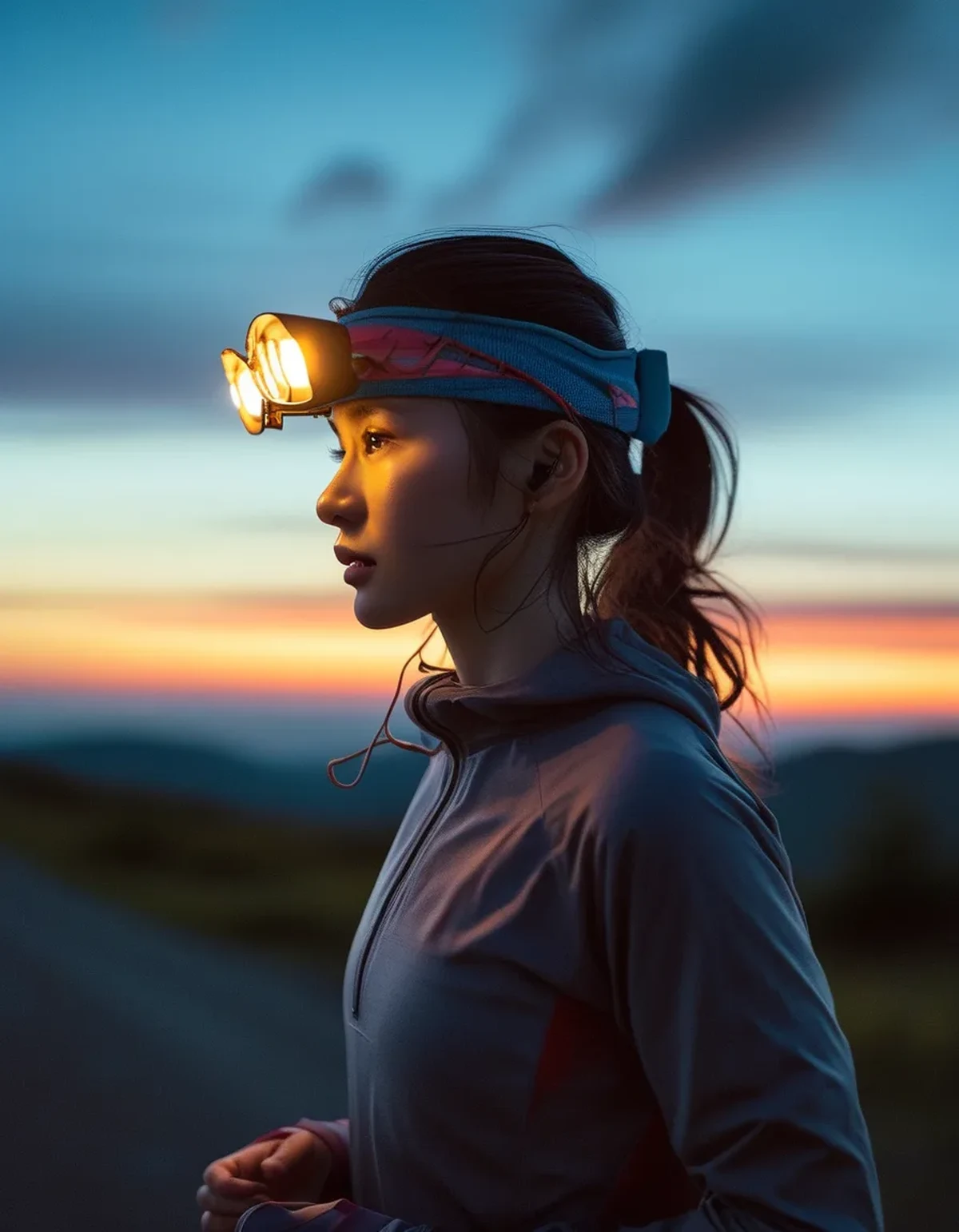
What does a good night running light setup look like?
Layered, not maximal.
- A moderate headlamp (roughly 200-400 lumens for road) with an adjustable tilt and a comfortable strap. The tilt mechanism should hold its position when you run - a lamp that creeps downward is a form problem in a package.
- A waist or chest light. The shadow-casting one. This is what actually makes uneven ground readable, and it is what most people are missing.
- A rear red light on the back of your vest or waistband, ideally flashing.
- Reflective material on moving parts - ankles, wrists. Motion is what drivers recognize as human, far more reliably than a static bright patch.
- A backup. A tiny keychain light weighs nothing and turns a dead battery from an emergency into an inconvenience.
Battery note worth knowing: most lamps dim substantially before they die, and cold weather accelerates it. Check the runtime at the brightness you actually use, not the headline number, which is usually quoted at the lowest setting.
What else should I check about my night running form?
A few things worth a deliberate look, since darkness hides all of them.
Cadence. If your watch shows a lower step rate at night than during equivalent daytime runs, that is the postural chain at work. Try counting steps for 30 seconds partway through and consciously shortening your stride slightly.
Shoulder tension. Cold plus concentration plus a bouncing lamp produces raised shoulders. Do a deliberate shoulder drop every ten minutes - it is a habit worth building.
Where your eyes go on downhills. This is where looking down is most tempting and most costly. Try to keep the gaze out ahead and let the near ground stay in peripheral vision.
Head position on hills. Uphill, the beam naturally points into the ground; downhill, into the trees. Adjust the tilt at the base of a long hill rather than compensating with your neck for ten minutes.
And the simplest one: run a familiar route in the dark first. Knowing the terrain lets you look up, which is most of what this article is about.
FAQ: Night Running Light Questions, Answered
Is a chest light better than a headlamp?
Different jobs. The chest or waist light gives you shadows and depth; the headlamp lets you look at something by turning your head - which matters at intersections and for spotting hazards to the side. Ideally, both.
How many lumens do I need?
For lit roads, 100-200 is plenty. For unlit roads, 200-400. For technical trail, 400+ combined across two lights. Beam pattern matters more than the number.
Does running at night actually affect sleep?
It can, for some people - vigorous exercise and bright light close to bedtime can delay sleep onset. Finishing at least 90 minutes before bed and dimming lights afterward helps most people who notice an effect.
TL;DR:
- A beam aimed too close makes you look down, which rounds your posture, shortens your stride, and drops cadence.
- Aim for 10-15 feet ahead on road, 6-10 on technical trail - and set the angle while running, not standing.
- Add a waist or chest light. Head-mounted light casts no shadows, so uneven ground is invisible.
- Moderate flood beats bright spot for road; keep the lamp under ~100 g.
- Reset the angle when terrain changes - autumn leaf cover changes footing fast.
Two minutes of adjustment at the start of the run buys you a straighter neck for the whole hour. Check where your gaze lands on the next one.
Keep Reading
This article is for general informational and styling purposes only. Fit, sizing, and product availability may vary.