Why Car Headlights Wreck Your Night Vision for Longer Than You Think
Quick Answer: Full dark adaptation takes your eyes twenty to thirty minutes to build and roughly one second of bright light to destroy. After oncoming headlights, useful low-light vision returns over about thirty to sixty seconds - which at a ten-minute mile is 90 to 175 yards of running mostly blind. The practical fixes are to look at the road edge rather than the lights, to shield with a cap brim or your hand, and to treat the moment a car passes as the highest-risk moment of the run rather than the safest.
The car passes and you can see again immediately. That is the impression, anyway.
What you actually have back is enough vision to keep running and nowhere near enough to see the raised kerb.
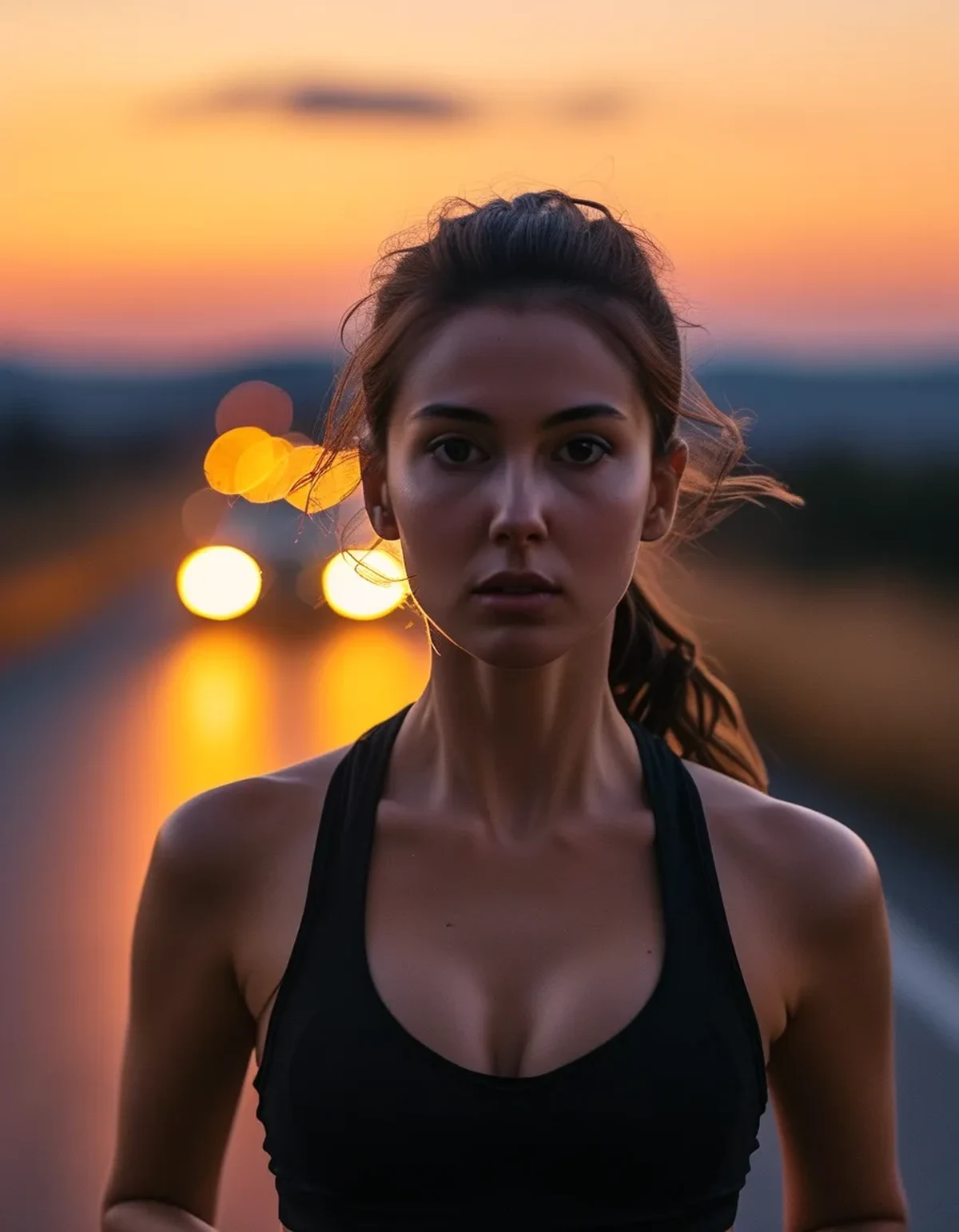
What is happening in your eyes when a car goes past?
Two systems, and the useful one is slow. Cones handle bright light and colour and recover in a couple of minutes. Rods handle low light, take twenty to thirty minutes to reach full sensitivity, and are what you are actually running on at night.
Bright light bleaches the pigment in the rods almost instantly. The chemical that makes low-light vision possible is consumed by the flash, and it has to be regenerated before those cells work properly again.
Regeneration is not linear. Most functional recovery happens in the first thirty to sixty seconds, but full sensitivity takes considerably longer - which is why a road with a car every minute never lets you reach proper dark adaptation at all.
Recovery slows with age. Dark adaptation gets measurably slower from the forties onward, so the same headlight costs a 55-year-old runner meaningfully more time than a 25-year-old one.
And the danger window is exactly when you feel safest. The car has gone, the road is quiet, you relax - and that is the stretch where the pothole, the kerb and the unlit cyclist are invisible.
Why modern headlights made this worse
LED and HID headlights are both brighter and cooler in colour temperature than the halogens most of us grew up with. Blue-rich light scatters more inside the eye, which produces more glare for the same measured brightness.
SUV and truck ride height puts the beam closer to eye level. A headlight at 30 inches aims a good deal more light into a standing runner’s eyes than one at 20 inches did.
Automatic high beams are common and imperfect. They are calibrated to detect other vehicles, and a runner is frequently not detected at all.
Wet roads roughly double the problem by reflecting the beam back up at you, which is why autumn evening runs after rain feel so much harder to see on than dry ones.
And oncoming plus following headlights is the worst combination, because the car behind removes your ability to use the dark side of the road as a recovery zone.
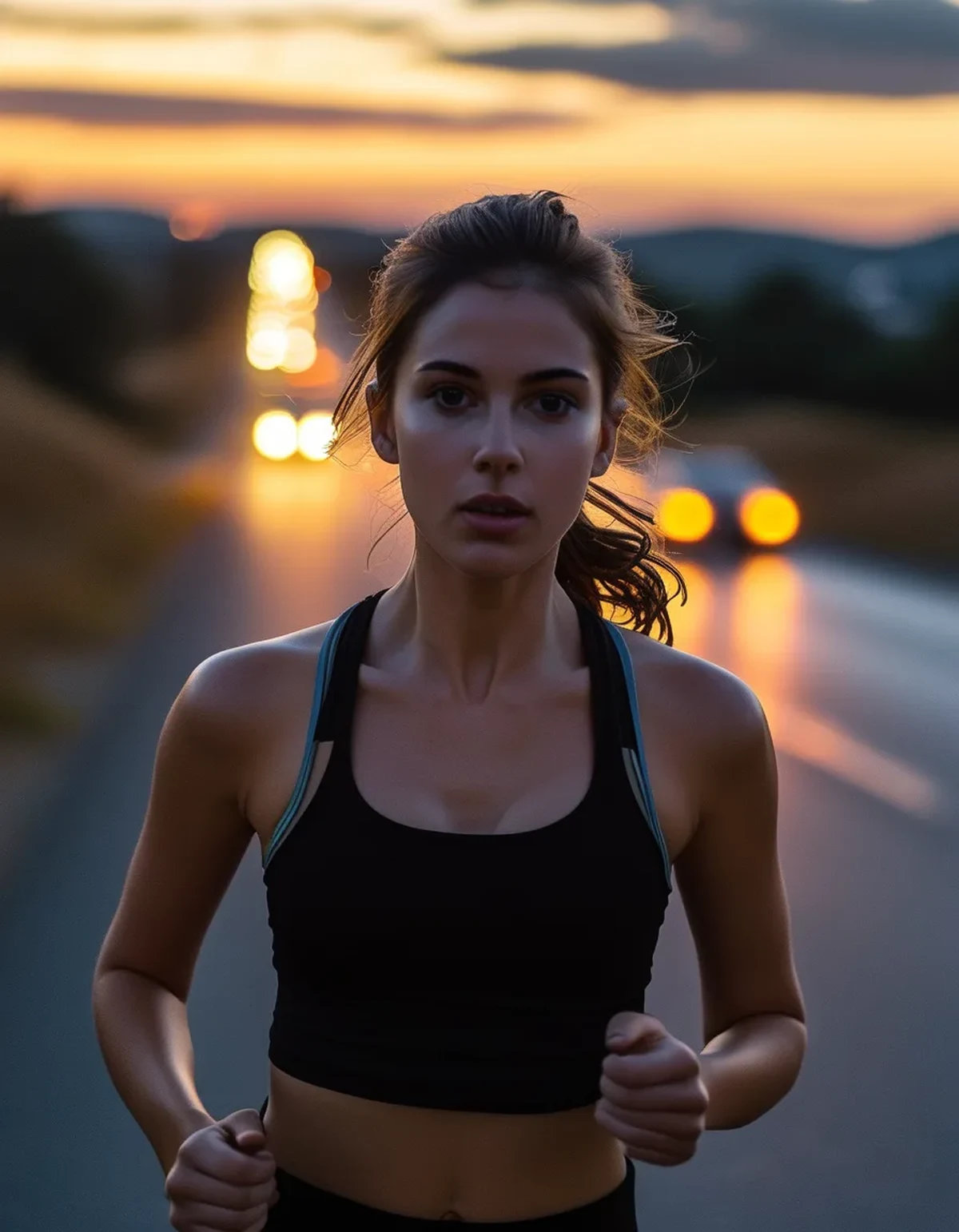
How to route and run around it
Look at the white line or the road edge, not at the car. Fixing your gaze on the verge ten to fifteen feet ahead keeps the brightest part of the beam out of your central vision, which is where the damage is done.
Shield with a cap brim or the flat of your hand. A cap worn low is the single cheapest improvement to night running comfort, and raising a hand to block a specific car costs nothing.
Close one eye as a car approaches, if the road is quiet enough to allow it. The closed eye keeps its dark adaptation and takes over the moment the car has gone. Sailors have used this for a very long time and it works.
Choose the route by lighting consistency rather than lighting amount. A uniformly dark path is easier to run than a road that alternates bright and dark every forty yards, because the alternation prevents adaptation entirely.
Slow down for the ten seconds after a car passes. This is the concrete behavioural change that matters most, and almost nobody does it because visibility feels restored.
Use a headlamp with a wide flood rather than a narrow spot. A tight beam makes a bright tunnel and darkens everything outside it, which increases the contrast your eyes have to keep adapting to.
What Nobody Tells You About Night Vision
Your own headlamp is degrading your dark adaptation too. A bright lamp keeps your eyes in cone mode, and the moment you switch it off or look outside its beam you have no low-light vision at all. Lower is often better than brighter.
Red light preserves dark adaptation and white light does not. A red rear light and a red-mode headlamp for map checks keeps the rods working - a white phone screen at full brightness wipes out twenty minutes of adaptation in about two seconds.
Looking slightly to the side of an object makes it easier to see in the dark. The centre of your retina is nearly all cones, so faint objects genuinely disappear when you look straight at them. Averted vision is a real technique.
Vitamin A deficiency impairs dark adaptation, which is the kernel of truth inside the carrots folklore. It matters if you are actually deficient and does nothing if you are not.
Sunglasses in bright afternoon light improve your evening vision slightly, because heavy daytime light exposure slows the evening adaptation curve.
And if oncoming lights have started producing starbursts or halos that were not there last year, that is worth an eye examination rather than a technique adjustment. This is general information, not medical advice.
FAQ: Headlights and Night Running, Answered
How long am I really impaired after a car passes?
Useful vision returns over roughly thirty to sixty seconds, with full sensitivity taking longer. On a busy road you may never be fully adapted at all.
Should I run facing traffic or with it?
Facing traffic is standard advice for seeing what is coming, and it does mean taking headlights directly. The seeing-and-being-seen benefit generally outweighs the glare, which technique can manage.
Do yellow or amber lenses help?
They increase contrast subjectively but reduce total light reaching the eye, which is a poor trade in genuine darkness. Clear lenses to block wind and grit are more useful at night.
Is a brighter headlamp always better?
No. Brighter narrows your usable field by deepening the contrast outside the beam. A wide flood at moderate output beats a narrow spot at high output for road running.
What is the single highest-value change?
Slowing down for the ten seconds after each car passes. It costs a few seconds a mile and covers exactly the window where you cannot see the ground.
TL;DR:
- Dark adaptation takes 20 to 30 minutes to build and about a second of headlight to destroy; useful vision returns over 30 to 60 seconds.
- Look at the road edge rather than the car, and shield with a cap brim or your hand.
- Closing one eye as a car approaches preserves adaptation in that eye for immediately afterwards.
- Slow down for ten seconds after each car passes - that is the window where you cannot see the ground.
- A wide flood headlamp beats a bright narrow spot, and red light preserves the night vision white light erases.
New halos or starbursts around lights are a reason to get your eyes checked rather than to adjust your technique.
Keep Reading
This article is for general informational and styling purposes only. Fit, sizing, and product availability may vary.