How to Run Safely in Neighborhoods Without Reliable Streetlights
Quick Answer: Running safely without reliable streetlights comes down to compensating with your own visibility gear (reflective clothing, a chest or headlamp) and route choice (sticking to routes with some ambient light and predictable, low-traffic paths) rather than relying on the environment to provide adequate lighting.
Waiting for a neighborhood to install better streetlights isn’t a practical safety plan for tonight’s run. The actual fix is compensating for what the environment isn’t providing.
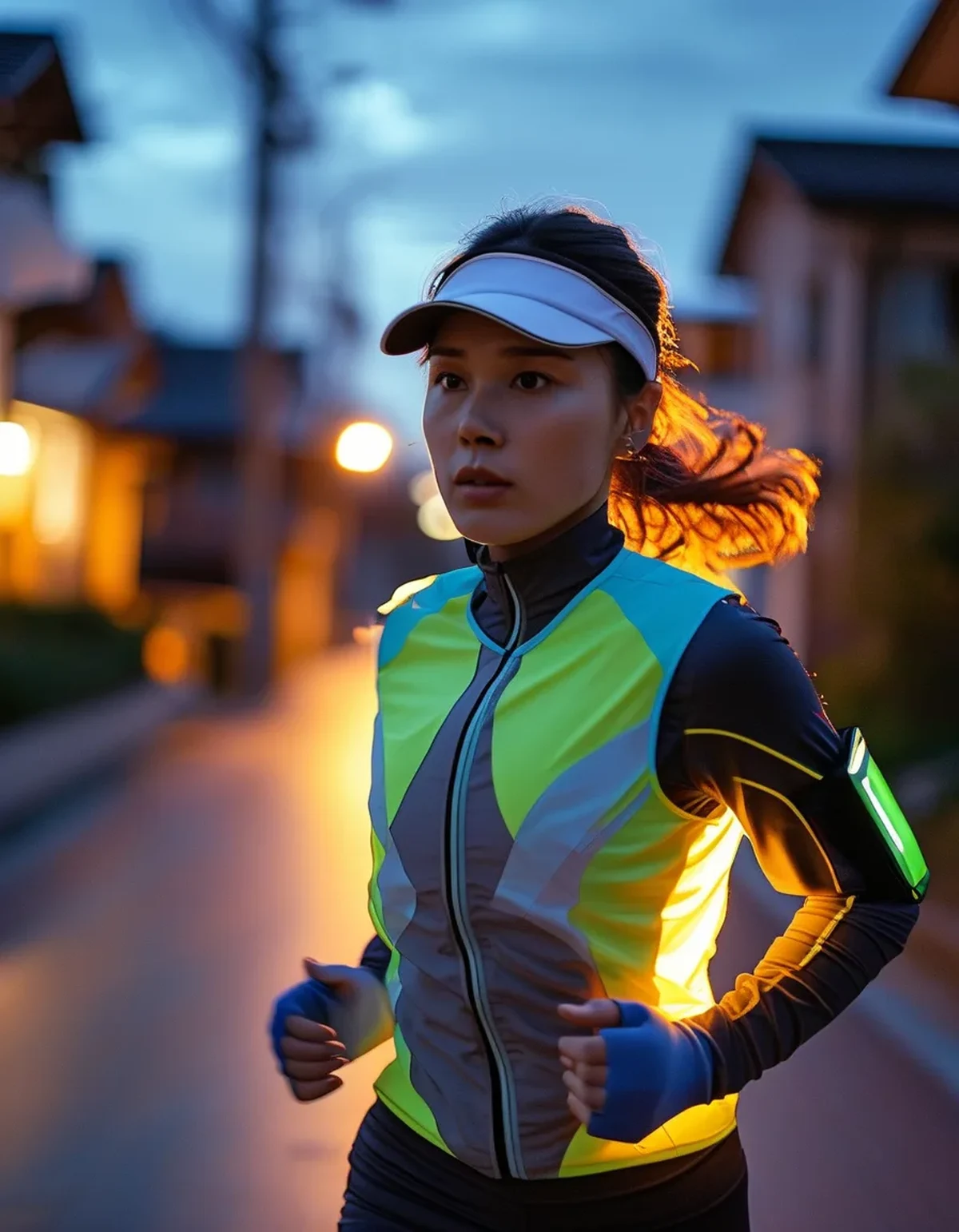
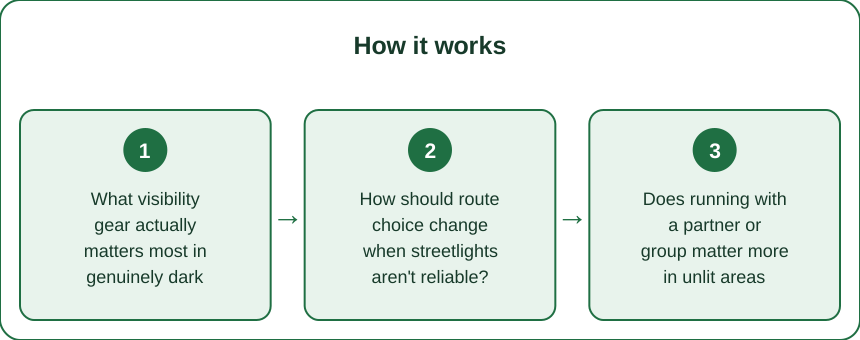
What visibility gear actually matters most in genuinely dark conditions?
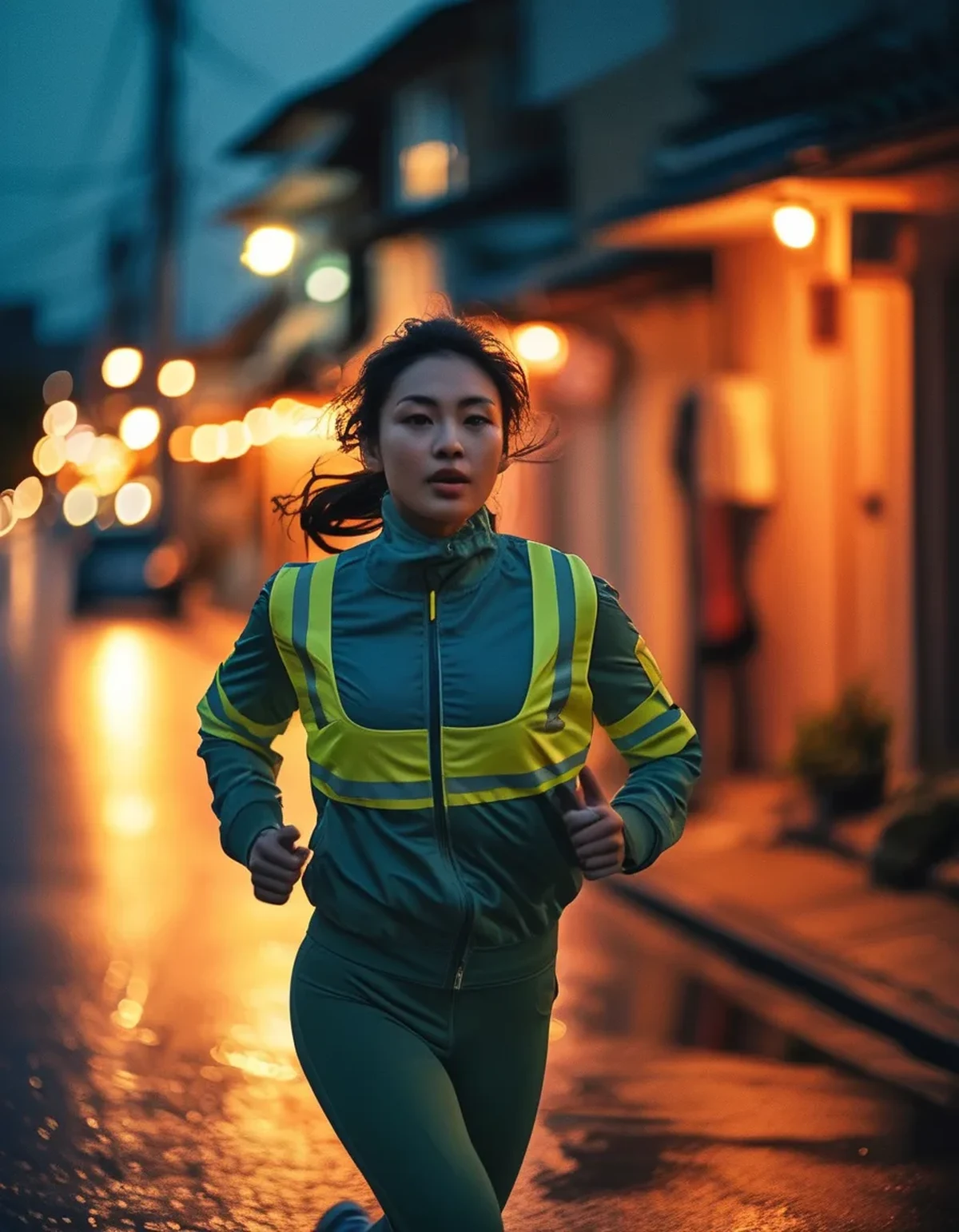
A chest-mounted or handheld light, rather than only a headlamp, illuminates the ground ahead more effectively for spotting uneven pavement, potholes, or curbs, since a headlamp’s beam moves with head position and can create blind spots during a steady forward gaze. Reflective clothing or a reflective vest, positioned at moving points like ankles and wrists (not just the torso), catches a driver’s headlights more effectively than torso-only reflective elements, since movement draws the eye more than a static reflective patch.
How should route choice change when streetlights aren’t reliable?
Prioritizing routes with some ambient light source — near still-open storefronts, gas stations, or areas with porch lights — over a technically shorter but completely unlit route is a reasonable tradeoff for safety. Sticking to routes you’ve run in daylight first, so surface hazards (potholes, uneven sidewalk, loose gravel) are already familiar, reduces the risk that comes from encountering an unknown hazard for the first time in low visibility.
Does running with a partner or group matter more in unlit areas specifically?
Yes, more than in well-lit conditions — a partner or small group increases collective visibility to drivers and provides a second set of eyes for hazards or unexpected situations, and it’s a commonly recommended safety adjustment specifically for routes without reliable lighting, even for otherwise experienced solo night runners.
Myth vs Fact: Running Without Streetlights
Myth: A regular running headlamp is enough to see the ground safely in a dark area. Fact: A chest-mounted or handheld light generally illuminates ground-level hazards more consistently, since it doesn’t move with head position the way a headlamp beam does.
Myth: Running only on nights with a full moon is a reliable lighting substitute. Fact: Moon phase provides inconsistent, weather-dependent ambient light that isn’t a dependable substitute for actual visibility gear and a familiar route.
FAQ: Running Safely Without Streetlights, Answered
Is it safer to run on the road or the sidewalk in an unlit neighborhood?
This depends on sidewalk condition and traffic volume — a well-maintained, low-traffic sidewalk is often safer for hazard avoidance, but running facing oncoming traffic on a road shoulder with good visibility gear is a reasonable alternative if the sidewalk is broken or uneven.
How much does reflective gear actually help if there are no headlights around, like on a quiet residential street?
Reflective gear’s main function is being seen by others (drivers, cyclists), so on a genuinely empty street it matters less for that purpose, but a light source for seeing the ground yourself remains important regardless of whether other people are around.
Should I change my running time rather than adjust gear and route?
If a genuinely safer, better-lit time (early morning versus late evening, for instance) is realistically available, that’s a reasonable option too — but for people whose only available time is after dark, gear and route adjustments are the practical path forward.
TL;DR:
- A chest-mounted or handheld light beats a headlamp alone for spotting ground-level hazards
- Reflective gear at moving points (ankles, wrists) catches headlights better than torso-only
- Choose routes with some ambient light and ones you’ve already run in daylight
- Running with a partner adds meaningful safety value specifically in unlit areas
A few gear and route adjustments compensate for what the streetlights aren’t providing, without needing to wait on infrastructure that may never change.
Keep Reading
This article is for general informational and styling purposes only. Fit, sizing, and product availability may vary.