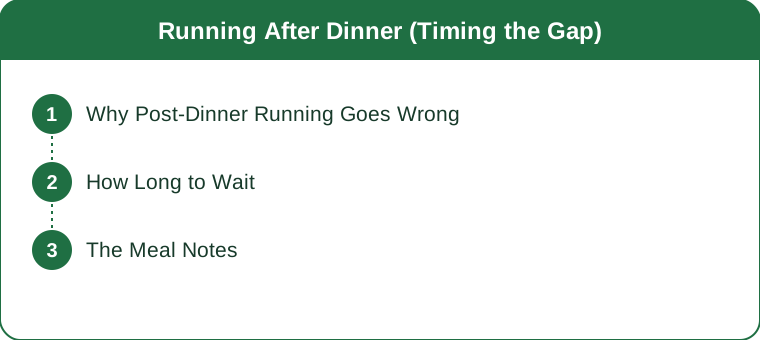
Running After Dinner (Timing the Gap)
Quick Answer: Wait about 2–3 hours after a full dinner, 1–2 hours after a light meal, and 30–45 minutes after a small snack. If your evening schedule can’t fit that gap, run before dinner on a small snack and eat properly afterwards — that solves the problem far more reliably than trying to digest faster.
You eat at 7:15. You’re out the door by 7:35 because that’s when the light goes. By the second mile you’ve got a stitch, a sloshing sensation somewhere behind your ribs, and the strong conviction that evening running just doesn’t agree with you.
Evening running is fine. The twenty-minute gap is the problem.

Should You Run Before or After Dinner?
Before, if you have the choice. Here’s why the after version goes wrong so often.
Digestion isn’t passive. After a meal your body sends a meaningful share of blood flow to the gut to do the work of breaking food down. Running wants that same circulation in your legs. When both systems demand it at once, the gut loses — digestion slows, food sits, and you get the cramping, the stitch and the nausea.
There’s a mechanical layer too. A full stomach physically moves with you. Every footstrike jostles a couple of pounds of partly digested dinner, which is exactly as pleasant as it sounds.
The variables that decide how long you need:
- Meal size. The single biggest factor. A full plate takes hours; a banana takes minutes.
- Fat and fibre. Both slow gastric emptying considerably. A creamy pasta or a big bean chilli sits far longer than plain rice and chicken.
- Intensity. An easy jog tolerates a fuller stomach than intervals or a tempo run. Hard efforts demand a longer gap.
- You, specifically. Tolerance varies enormously between people. Some runners genuinely head out 45 minutes after eating and feel fine.

How Long Should You Wait After Eating to Run?
Use these as starting points, then adjust:
| What you ate | Wait before an easy run | Wait before a hard run |
|---|---|---|
| Full dinner (protein + carbs + fat) | 2–3 hours | 3+ hours |
| Light meal (small bowl, low fat) | 1–2 hours | 2 hours |
| Snack (banana, toast, yogurt) | 30–45 minutes | 60 minutes |
| Liquid only (sports drink) | 15 minutes | 30 minutes |
Then run your own experiment. For two weeks, note what you ate, the gap you left, and how the run felt on a 1–5 scale. Most people find their personal number inside four or five runs, and it’s often shorter than the generic advice suggests.
If the gap simply doesn’t fit your evening — and for most people with a normal dinner time it doesn’t — flip the order. Snack at 5pm, run at 6:30, eat dinner at 7:30. This is what most experienced evening runners actually do, and it neatly solves the recovery-food question at the same time.
Myth vs Fact
Myth: You should run on a completely empty stomach in the evening. Fact: That works for a 20-minute jog and falls apart on anything longer. By 7pm you’re a long way from lunch, and a genuinely empty evening run usually feels flat and heavy. A small carb snack an hour before is the sweet spot.
Myth: A side stitch means you ate too much. Fact: Meal timing is one cause, but stitches also come from shallow breathing, a cold start, and running hard too soon. If your stitch shows up regardless of what you ate, look at your warm-up and your breathing rhythm first.
Myth: Eating after an evening run will make you gain weight. Fact: Total daily intake matters, not the clock. Skipping post-run food actually undercuts recovery — you want protein and carbs reasonably soon after, and that’s true at 9pm as much as at noon.
Myth: Coffee before an evening run is a great idea. Fact: Great for the run, rough on your sleep. Caffeine has a half-life of roughly 5 hours, so a 7pm espresso is still half in your system at midnight.
The Meal Notes
For the pre-run meal:
- Lighter and simpler. Rice, pasta, toast, banana. Familiar food, nothing new.
- Lower in fat and fibre. Save the salad, the beans and the fried food for after.
- Around 200–300 calories if you’re eating an hour before.
For after:
- Eat properly. Some protein and some carbs within an hour or so supports recovery — a real meal, not an apology.
- Don’t leave it too late. A large meal right before bed disrupts sleep for a lot of people. If your run ends at 9pm, aim to eat by 9:30 and keep it moderate.
- Hydrate across the evening, not all at once at 7:25. A full stomach of water sloshes as much as food does.
One sensible caveat: persistent stomach pain, reflux or nausea when you run isn’t a timing puzzle to solve indefinitely. If it keeps happening regardless of the gap and the food, that’s worth mentioning to a doctor.
Mini FAQ
Can I run 30 minutes after eating?
After a snack, usually yes — 30 to 45 minutes is enough for a banana or a slice of toast at easy pace. After a full dinner, almost certainly not; you’d want two hours or more, and the run will tell you within the first mile if you got it wrong.
Why do I get nausea running after dinner?
Blood flow is diverted from your digestive system to your working muscles, so food sits in the stomach longer than usual. Add the physical jostling of a full stomach and nausea is the common result. Longer gap, smaller meal, lower fat, and an easier first mile all help.
Is it bad to eat right after an evening run?
Not at all — it’s actively good for recovery. Aim for protein and carbohydrate within about an hour of finishing. The only thing worth avoiding is a very large, very late meal immediately before bed, since that tends to interfere with sleep quality.
TL;DR
- Running after dinner isn’t the problem; the 20-minute gap is.
- Full dinner: wait 2–3 hours. Light meal: 1–2 hours. Snack: 30–45 minutes.
- Fat, fibre, meal size and run intensity all lengthen the gap you need.
- Simplest fix: snack at 5, run at 6:30, eat dinner after.
- Keep the pre-run meal low-fat, low-fibre and familiar; eat properly afterwards.
- Track five runs to find your personal number — it’s usually shorter than the generic advice.
Size the gap to the meal, and evening running stops feeling like a digestive gamble.
Keep Reading
This article is for general informational and styling purposes only. Fit, sizing, and product availability may vary.