Night Running Gear: The Visibility-and-Comfort Kit From Head to Toe
Night running gear has one job split in two — being seen by drivers and seeing the ground — and the kit that does both well costs less than a pair of shoes. The head-to-toe guide: the visibility tiers, the seasonal builds and what to buy first.
The Be-Seen Layer
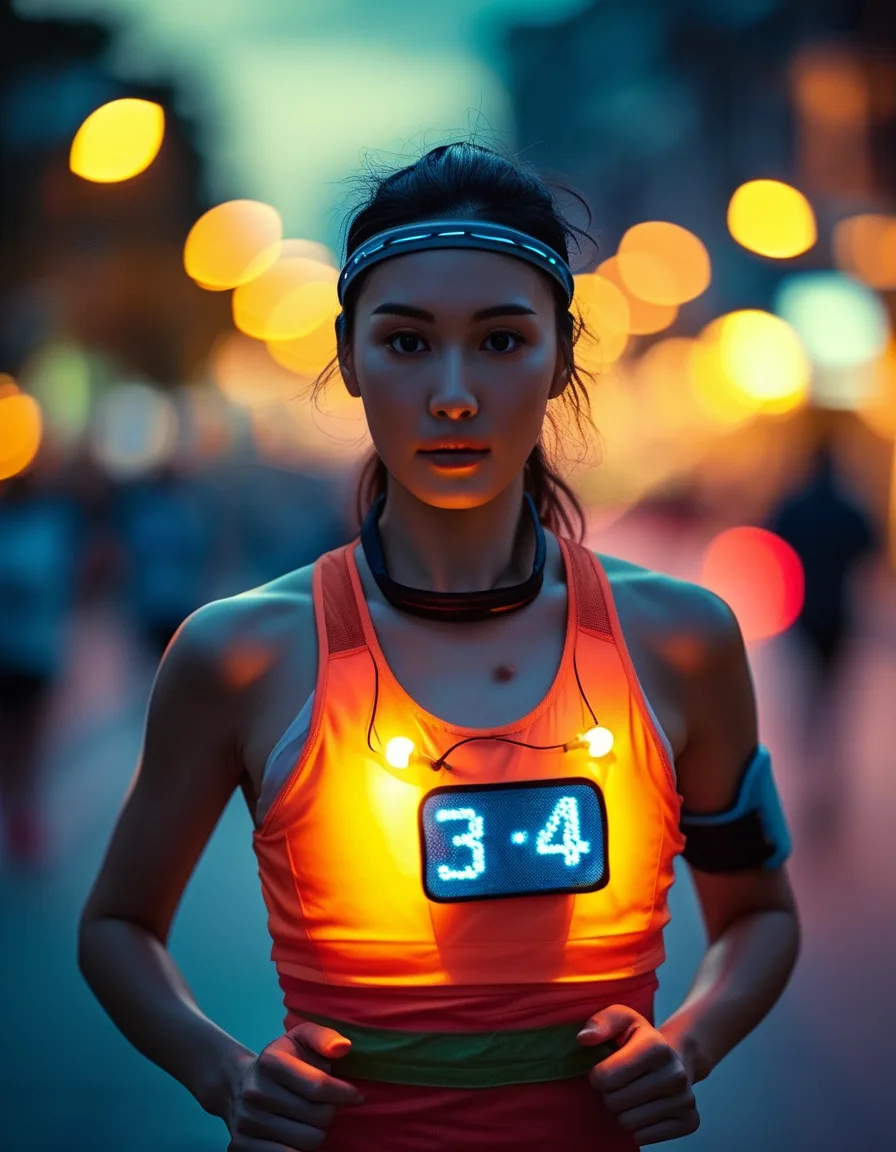
Visible from every angle: the reflectivity science (the retro-reflective materials bouncing headlights back at drivers — the visibility jumping from meters to hundreds of meters; the moving-limb reflectors being most effective: the brain-catching biological motion of ankle-and-wrist bands), the coverage map (the 360-degree audit — the front-back-and-sides check; the runner visible approaching AND crossing; the reflective-vest-or-strap systems that cover the torso), the active-light tier (the LED bands, clip lights and light-up vests — the be-seen lights that work where no headlights shine; the rear red-blink borrowed from cycling per the visibility doctrine), the color honesty (the fluorescent yellows-and-oranges working at DUSK, the reflectives working in darkness — the two-technologies truth; the black-kit night runner being invisible regardless of fitness), and the fit notes (the bands that don’t bounce, the vest that doesn’t chafe — the comfort that decides whether it’s worn per the gear-adherence law).
The See-With Layer
Lighting your path: the headlamp standard (the 200-plus-lumen running headlamps — the beam pattern over raw brightness; the bounce-resistant fit bands; the rechargeable economics), the chest-light alternative (the torso-mounted beam that doesn’t bob — the shadow-casting angle that reads terrain BETTER than head-height; the headlamp-hater’s answer), the handheld-and-waist options (the grip lights and belt lamps as the third tier — the preference call per the trial doctrine), the beam craft (the angled-down setting that lights the next five meters — the blinding-oncoming-runners etiquette; the high-beam saved for trails), the trail-versus-street calibration (the street’s ambient light needing less lumens — the trail night run demanding real throw and a backup light per the trail-safety doctrine), and the battery discipline (the charge-before-every-run habit — the mid-run dead lamp being a safety event, not an inconvenience; the battery-level check in the pre-run ritual).

The Seasonal Builds
The kit by weather: the summer night kit (the minimal-fabric heat answer from the heat doctrine PLUS full visibility — the reflective shorts-and-band build; the sweat-proof light mounts), the winter night build (the layering doctrine with reflectivity at the OUTER layer — the reflective shell over thermal base; the glove-and-headband reflective accents; the ice-aware traction from the winter doctrine), the rain adaptation (the reflective rain shell and the light that survives wet — the water-resistance ratings checked; the extra-caution pace on wet-dark roads: the drivers seeing worse too), the transition-season default (the vest-and-bands core that layers over anything — the year-round backbone), and the wash-and-wear note (the reflective coatings surviving proper care — the air-dry preference from the activewear-care doctrine; the faded reflectivity checked yearly with a headlight test).
The Buying Priority
First dollar to full kit: the priority order (one — the reflective vest-or-strap system: the twenty-dollar 360-visibility foundation; two — the ankle-wrist bands: the motion-reflectors that drivers’ brains catch; three — the headlamp-or-chest light for unlit routes; four — the rear red blinker; five — the reflective outer layers as replacements arrive), the budget honesty (the complete safety kit under a hundred dollars — the cost-per-run math approaching zero; the safety spend that precedes the shoe upgrade per the priority doctrine), the test protocol (the kit checked by a friend with headlights — the actual-conditions audit; the gaps found before traffic finds them), the route-and-behavior reminder (the gear supplementing, never replacing, the safe-route and traffic-rules doctrine — the lit-route facing-traffic fundamentals from the safety guide; the visible runner who still runs defensively), and the identity close (the night runner glowing like a small constellation being the standard, not the overkill — the drivers given every chance; the run reclaimed from the short days, safely lit from both directions). Vest first, moving-limb bands second, light the path third: the darkness, equipped for.
Buy in order: a reflective vest, then ankle-wrist bands (moving-limb reflectors catch drivers’ brains best), then a headlamp or chest light for unlit routes — under $100 total. Reflectives at the OUTER layer, charged before every run, tested by headlight.
Keep Reading
This article is for general informational and styling purposes only. Fit, sizing, and product availability may vary.