Morning Runs vs Night Runs: The Honest Comparison for Real Schedules
The best-time-to-run debate has physiology, but the honest answer is that schedule-fit beats circadian optimization — the run that happens outranks the run that’s theoretically better. The comparison: what the science says, what your life says and how to make either slot work.

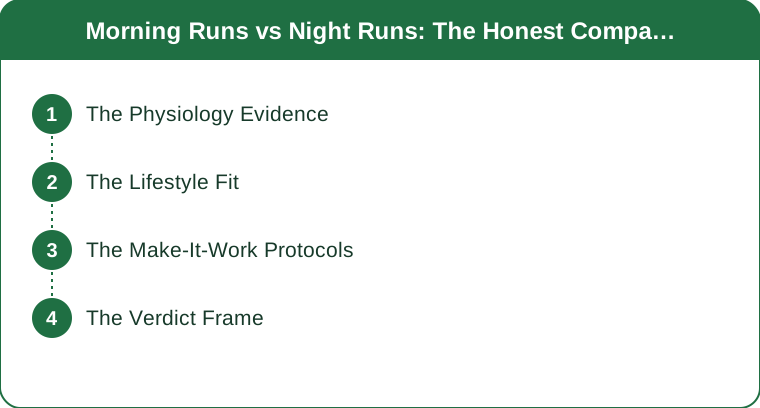
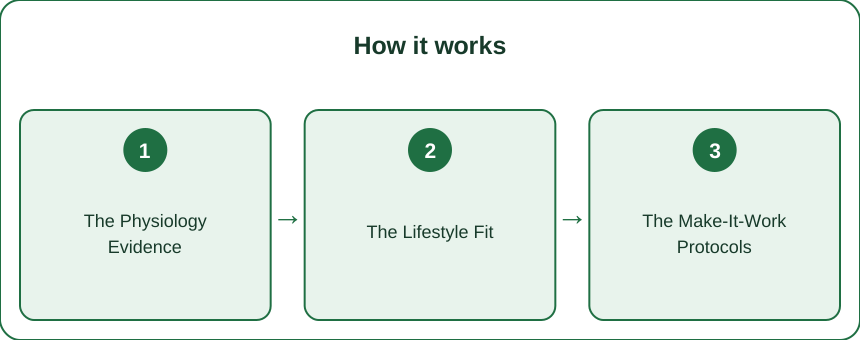
The Physiology Evidence
What time-of-day actually changes: the evening-performance edge (the body temperature and muscle function peaking late afternoon — the PR-attempt slot; the studies favoring evening for top-end performance), the morning-adaptation equality (the training ADAPTATIONS being similar across times — the fitness built at 6am equaling the 6pm version; the consistency mattering far more than the clock), the sleep interactions (the morning run’s circadian bonus — the daylight-anchor from the sleep doctrine; the late-hard-run’s sleep-onset tax for some: the evening intensity finishing two-plus hours before bed), the fasted-versus-fed note (the morning runner’s fuel decisions from the fuel-timing doctrine — the easy-run-fasted tolerance versus the quality-session breakfast; the evening runner’s afternoon-snack timing), and the heat-season layer (the summer flipping the debate — the dawn-and-dusk slots being the only sane ones per the heat doctrine; the season overriding preference).
The Lifestyle Fit
The real decision factors: the schedule audit (the slot that’s actually PROTECTED — the morning’s meeting-proof quiet versus the evening’s negotiable chaos; the calendar honesty from the consistency doctrine), the chronotype respect (the natural larks and owls performing better in their windows — the forced-5am owl quitting by March; the body’s preference as data, not weakness), the family logistics (the parent’s before-they-wake slot versus the partner-handoff evening — the household treaty from the family doctrine), the safety calculus (the darkness falling on BOTH ends — the night-running safety doctrine’s visibility-and-route rules applying to winter mornings equally), the social factor (the evening group runs and clubs — the community access that mornings rarely offer per the running-community doctrine), and the split-week legitimacy (the hybrid schedule — the weekday mornings and weekend evening long runs; the consistency living in the week’s total, not the identical slot).

The Make-It-Work Protocols
Optimizing your slot: the morning protocol (the gear staged the night before — the friction-removal doctrine; the ten-minute longer warm-up for the cold-stiff body; the coffee-and-toast timing for quality sessions; the daylight exposure counted as the circadian bonus), the night protocol (the afternoon snack that fuels without weighing — the 3pm banana-and-nuts tier; the intensity finished two hours pre-bed with the wind-down routine after; the visibility kit from the night-run doctrine as the non-negotiable; the dinner eaten after, kept light-ish), the transition tips (the slot-switch done gradually — the two-week adjustment window; the paces expected to feel different: the morning stiffness and the evening bounce both normal), and the season rotation (the slot migrated with daylight and temperature — the summer dawn, the winter lunch option, the spring-fall freedom; the flexible runner outlasting the rigid one).
The Verdict Frame
Settling it for yourself: the two-week experiment (each slot trialed honestly — the completion rate, energy and enjoyment logged per the tracking doctrine; the data beating the debate), the consistency supremacy restated (the mediocre-time run beating the perfect-time skip — the adherence law that governs everything; the best time being the one your life defends), the performance-day exception (the race-morning reality meaning SOME morning running before morning races — the race-rehearsal doctrine; the body taught to perform at the start-gun hour), the guilt release (the evening runner shamed by 5am-club content unshamed — the fitness identical, the smugness optional per the fitness-culture doctrine), and the closing answer (the question ‘when should I run’ answered permanently: whenever you actually will, safely, most weeks of the year; the debate retired, the shoes by whichever door). Test both, keep the one that happens, stage the gear: the slot, settled.
Evening bodies perform better but adaptations are equal — the slot your schedule actually defends wins. Morning runners stage gear and warm up longer; night runners snack at 3pm, finish intensity two hours pre-bed, and never skip the visibility kit.
Keep Reading
This article is for general informational and styling purposes only. Fit, sizing, and product availability may vary.